Introduction:
Critical thinking is a superpower that helps us engage deeply with what we read. Today, we're going to explore how to use our critical thinking skills during intensive reading. Our focus will be on understanding how to infer missing words by paying close attention to the context.
Part 1: Critical Thinking and Intensive Reading
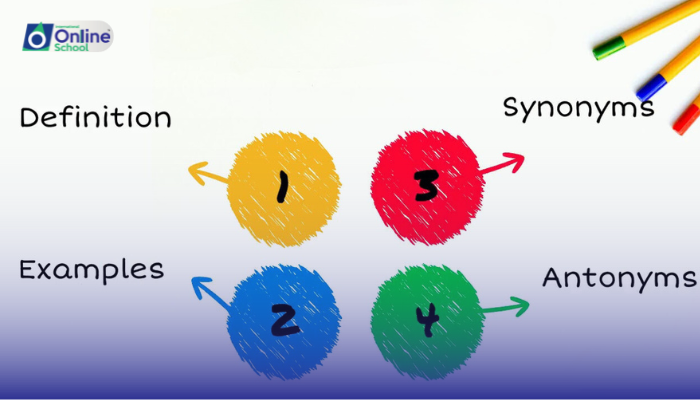
Definition: Critical thinking involves actively and thoughtfully engaging with information, considering its meaning, validity, and implications.
Examples:
Questioning: Ask questions about the text to deepen your understanding. For instance, "Why did the character make that choice?"
Predicting: Make predictions about what might happen next based on clues in the text.
Analyzing: Break down the information to understand its parts and their relationships.
Evaluating: Assess the quality and relevance of information in the text.
Making Connections: Relate the text to your own experiences or other things you've read.
Activity 1: Critical Thinking Reflection
Read a short passage and discuss as a class how critical thinking can enhance comprehension. Share thoughts on questions, predictions, and connections.
Part 2: Using Context to Infer Missing Words
Definition: Using context involves looking at the surrounding words and sentences to figure out the meaning of a word or phrase.
Examples:
i. The detective carefully examined the crime scene. He deduced that the ________ had used a crowbar to break in.
ii. The chef added a pinch of ________ to enhance the flavor of the dish.
iii. The student was determined to overcome the challenge, so he approached it with __________.
iv. The hiker, exhausted and thirsty, eagerly reached for his ________ to quench his thirst.
v. Sarah's room was filled with the sweet fragrance of her favorite ________.
Activity 2: Contextual Inference Exercise
Provide students with sentences where a word is missing. Encourage them to use context to infer the missing word. Discuss different approaches and solutions as a class.
